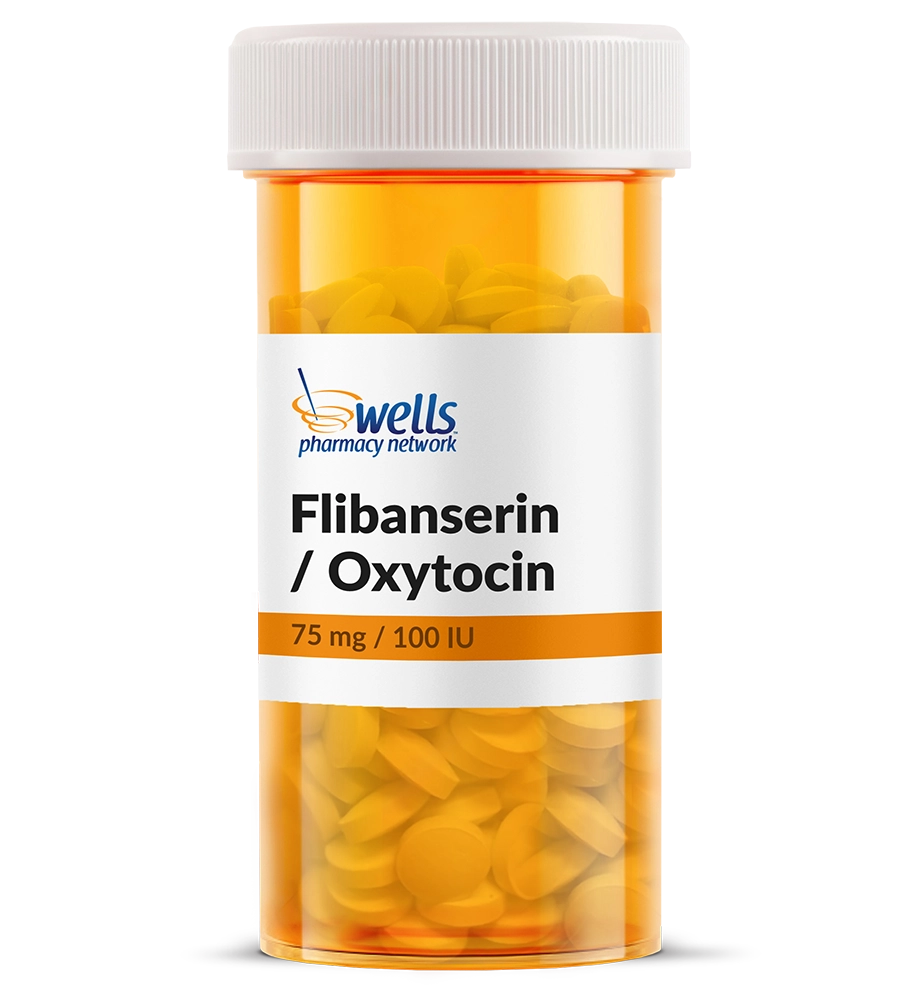
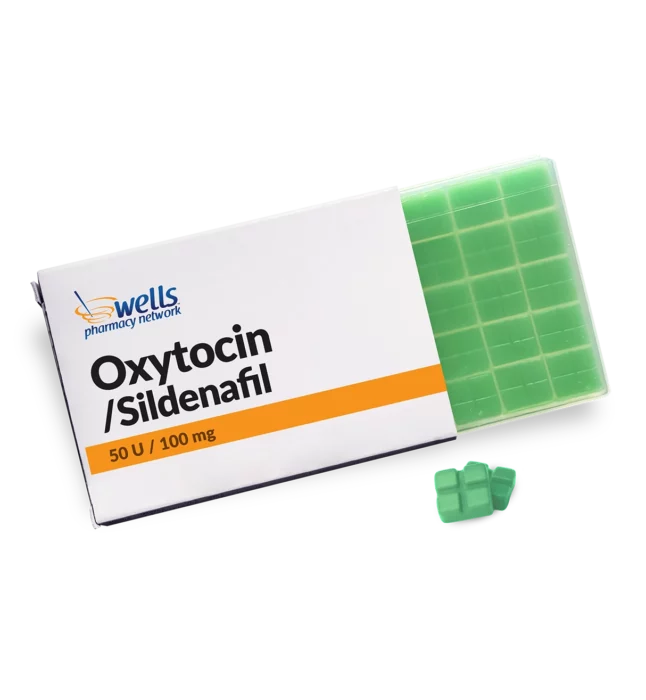
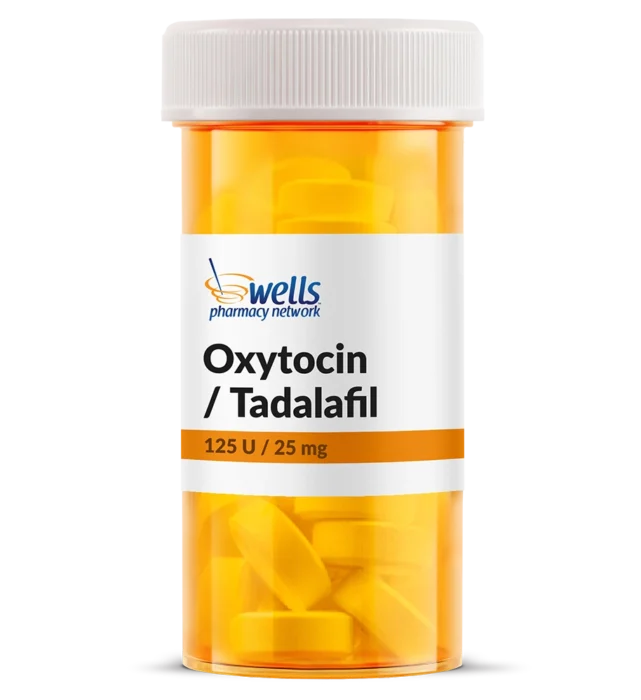
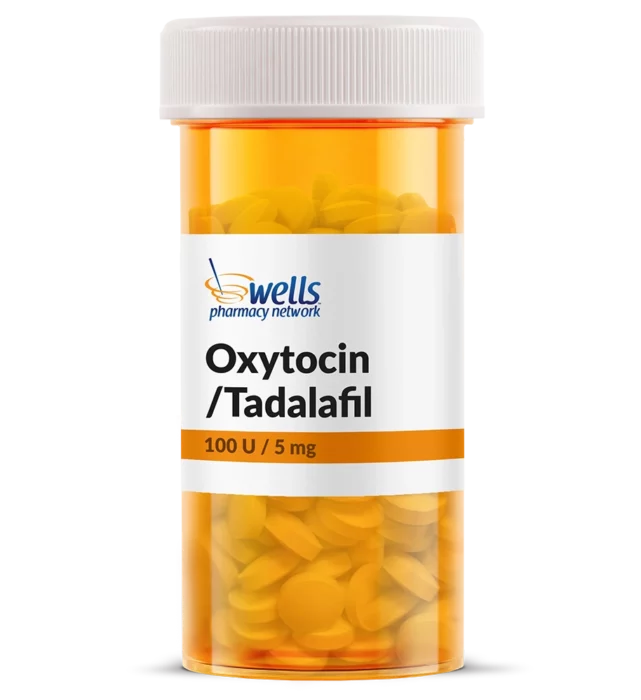
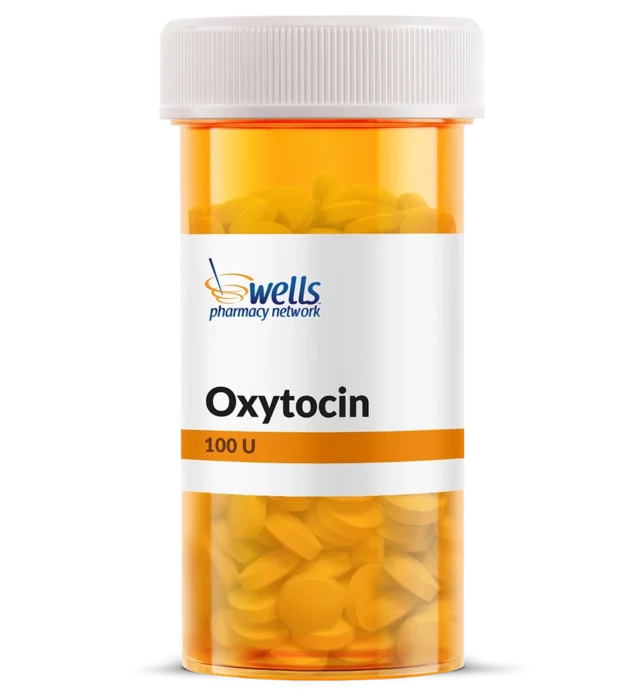
Disclaimer:Images are for reference only; actual products may vary.
Product Overview
Description
Flibanserin / Oxytocin Description1-9
Flibanserin has been used to treat hypoactive sexual desire disorder in premenopausal women. The goal of the medication is to increase sexual desire and the number of satisfying sexual events. Flibanserin, which has generally been administered at bedtime, has a half life of 11 hours. After oral administration, flibanserin reaches its peak concentration within 45 minutes, is approximately 33% orally bioavailable, and reaches steady state within 3 days.
Oxytocin is produced in the hypothalamus and stored in the posterior portion of the pituitary gland. Oxytocin is made synthetically and has activity identical to natural oxytocin. Oxytocin stimulates contraction of smooth muscle in the uterus during labor and stimulates the alveolar ducts to eject milk after it has been produced in the breast. Thus, because of the actions of oxytocin on the uterus, it has been used to induce labor, aid in the delivery of the placenta, and control postpartum bleeding. Oxytocin has also been associated with social bonding, mood regulation and sexual functioning.
Mechanism of Action
Flibanserin1,2
An imbalance in the neurotransmitters dopamine (DA), norepinephrine (NA) and serotonin (5-HT) may affect the ability for women to have positive sexual desire (libido) and have satisfying sexual events. In the prefrontal cortex, serotonin may be at increased amounts while norepinephrine and dopamine may be at decreased levels. Flibanserin has activity on serotonin receptors (5-HT1A and 5-HT2A). This activity leads to elevated NE and DA levels and reduced serotonin levels within the prefrontal cortex intracellularly. The drug may also have activity on 5-HT2B, 5-HT2C, and DA D4 receptors. The drug has not been found to be addictive or lead to misuse.
Oxytocin3-9
Oxytocin causes G-protein coupled receptors to increase intracellular calcium which leads to uterine contraction. The stimulation of uterine contractions causes more oxytocin to be released. As more oxytocin is released it positively influences even more release of oxytocin. This release of oxytocin is called positive feedback which is much different than how many hormones work in the endocrine system. Oxytocin administered exogenously causes the same response as endogenously produced oxytocin. Not only does oxytocin stimulate uterine contractions, but it also causes contractions of myoepithelial cells in the alveolar ducts found in female breast tissue. These contractions force milk from these ducts into even larger sinuses, which subsequently enables milk expulsion. When a baby attempts to latch onto the mother’s breast it causes oxytocin secretion into the blood in the same manner as vaginal delivery; instead of uterine contractions, milk is ejected from the breast. Like the actions of oxytocin in the uterus to stimulate contractions during delivery, milk-ejection from breast tissue occurs due to positive feedback. In the brain, it is proposed that oxytocin stimulates social and sexual function by its activity in many areas of the brain including its activity on and with neurotransmitters including dopamine. Both oxytocin and dopamine have been found to increase in the brain during sexual activity.
Adverse Reactions
Common2
Flibanserin
Dizziness
Insomnia
Somnolence
Nausea
Anxiety
Oxytocin3-9
Common
Loss of appetite
Nausea, vomiting
Stomach pain
Adverse effects that have been reported with pharmacologic therapies in this category may include dizziness, somnolence, fatigue, nausea, dry mouth, and hypotension. Syncope has been reported in rare cases. Most adverse effects are mild to moderate and may improve with continued use or dose adjustment under medical supervision.
Contraindications & Precautions
Contraindications2
Known hypersensitivity or intolerance to Flibanserin u Oxytocin
Precautions2
Hypotension (contraindicated with alcohol)
Central nervous system depression
Other Contraindications & Precautions
Hepatic failure
Activities requiring coordination and concentration
WellsYI Contraindications WellsYI, a compounded preparation, should not be used in patients with known hypersensitivity to any component of the formulation. Use is contraindicated in patients with hepatic impairment due to increased risk of adverse effects. Concomitant use with strong or moderate CYP3A4 inhibitors may significantly increase systemic exposure and risk of adverse reactions. Alcohol use may increase the risk of hypotension and syncope and should be avoided.
Warnings & Precautions Use caution in patients with a history of hypotension, cardiovascular conditions, or those taking medications that may lower blood pressure or cause CNS depression. Patients should be counseled on the potential for dizziness, somnolence, and impaired alertness, particularly when initiating therapy or adjusting dose.
Storage
Store at controlled room temperature (20°C to 25°C / 68°F to 77°F)
Protect from moisture and light
Keep in a tightly closed container
References
Pierrelus C, Patel P, Carlson K. Flibanserin. StatPearls. November 10, 2023. Accessed January 11, 2026.
Sprout Pharmaceuticals, Inc. ADDYI (flibanserin) tablets, for oral use[Package Insert]. 2025. Available from: https://addyi.com/pi/.
Osilla EV, Patel P, Sharma S. Oxytocin. [Updated 2025 Feb 15]. In: StatPearls [Internet]. Treasure Island (FL): StatPearls Publishing; 2025 Jan-. Available from: https://www.ncbi.nlm.nih.gov/books/NBK507848/
Kou J, Lan C, Zhang Y, Wang Q, Zhou F, Zhao Z, Montag C, Yao S, Becker B, Kendrick KM. In the nose or on the tongue? Contrasting motivational effects of oral and intranasal oxytocin on arousal and reward during social processing. Transl Psychiatry. 2021 Feb 4;11(1):94.
Zhuang Q, Zheng X, Yao S, Zhao W, Becker B, Xu X, Kendrick KM. Oral Administration of Oxytocin, Like Intranasal Administration, Decreases Top-Down Social Attention. Int J Neuropsychopharmacol. 2022 Nov 17;25(11):912-923.
Quintana DS, Glaser BD, Kang H, Kildal ESM, Audunsdottir K, Sartorius AM, Barth C. The interplay of oxytocin and sex hormones. Neurosci Biobehav Rev. 2024 Aug;163:105765.
Petersson M, Uvnäs-Moberg K. Interactions of Oxytocin and Dopamine-Effects on Behavior in Health and Disease. Biomedicines. 2024 Oct 24;12(11):2440.
Disclaimer
This information is for educational purposes only. This compounded product has not been reviewed, approved, or evaluated by the Food and Drug Administration for safety and effectiveness. This product is not intended to diagnose, treat, cure, or prevent any disease. No claims are made regarding treatment, cure, or prevention of any disease or condition.
This information may not cover all possible drug information about this product. Call your doctor for medical advice and/or about side effects. You may report side effects to the FDA at 1-800-FDA-1088. A Wells Pharmacy Network pharmacist will be happy to answer any questions. For consultation, please call 1-800-622-4510.
Clinical Use: This compounded preparation has not been evaluated or approved by the FDA for safety or effectiveness. Therapy should be prescribed only after appropriate patient evaluation and individualized risk-benefit assessment by a licensed healthcare provider.